
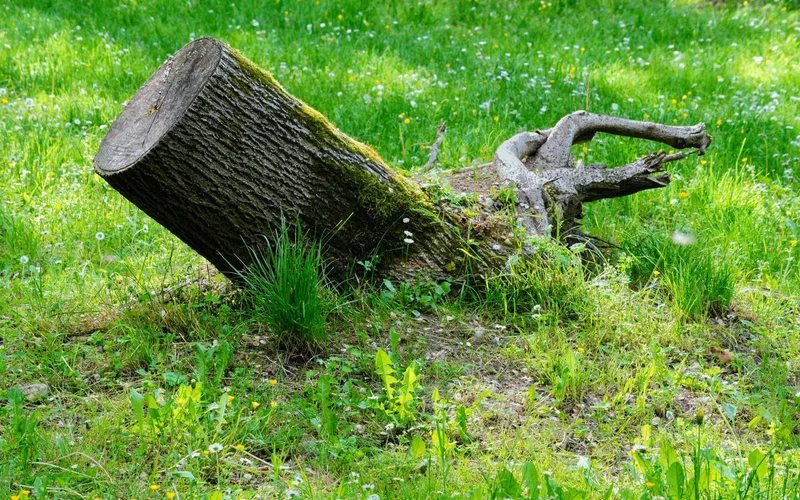
Compare grinding and extraction by looking at the next use of the site. If you want to mow across the old spot, ask the contractor what needs to be removed to return the surface to a lawn. If another project needs a clear footprint, bring its plan and ask how much buried wood and disturbed soil the next contractor can accept. Illinois Extension outlines the different ways an unwanted stump can be handled.
Mark what is included below grade
Grinding reduces the wood in the area the machine reaches. Ask for a sketch marking the intended depth and any exposed roots included. For digging or extraction, ask how far the excavation extends, what parts of the root system can remain and how much backfill the work might need. Iowa State Extension discusses how larger stumps change the practicality of digging. Have the contractor identify utilities and site constraints before settling either scope.
Compare the ground you get back
Record who hauls debris, what will be used as fill, and who brings the spot to the surrounding grade. If a new tree is the next project, keep the planting decision separate and look at the soil and rooting room nearby. If the stump can remain without blocking a route or project, discuss leaving it with the property manager or contractor. Putting a future use against each option makes the differences visible.
Bring the selected approach to the written quote comparison, or compare new planting sites before committing to work in the old hole.