
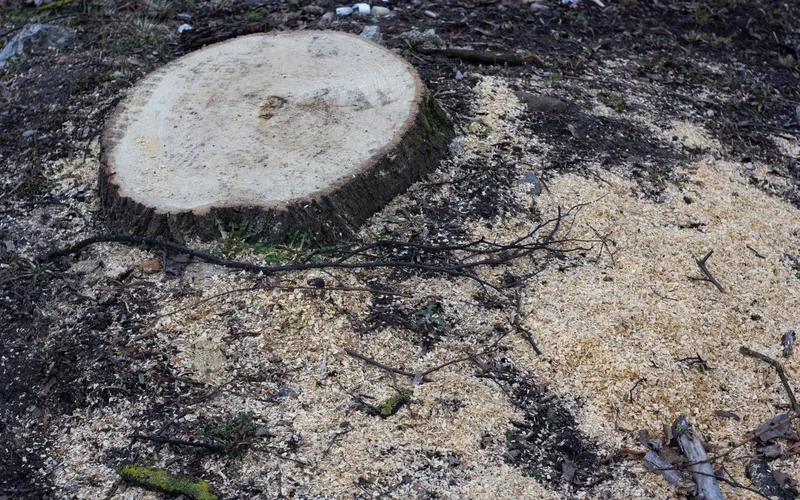
Repair a lawn after stump grinding once the debris is cleared, the patch holds suitable soil and its surface meets the surrounding lawn. Ask who handles the soil or debris if that was part of the scope. Watch the patch after rain. A low spot that holds water or a seedbed still full of woody material needs attention before you try to match the existing turf.
Match the seed to the lawn and the season
Look at sun, foot traffic and irrigation when choosing turf. Take a photo or a sample to a garden center or extension office if the surrounding type is unclear. Illinois Extension identifies late summer to early fall as the preferred seeding period for cool-season lawns and gives a separate northern Illinois range. If the site is ready outside that window, use the same source to compare options and decide how to manage the exposed soil in the meantime.
Keep the patch level and give seed soil contact
Prepare a surface the seed can touch and keep the patch moist while it establishes, following the local extension guide and product directions. Illinois Extension describes seed-to-soil contact and follow-up care for bare patches. Mark the patch during establishment so it is easy to avoid during mowing and foot traffic. If a depression returns or the seed fails in one spot, look at grade, moisture and the amount of remaining debris before repeating the same repair.
If the surface is still woody, start with grindings and fill. For another planting instead of grass, compare sites for a replacement tree.
Read next: choose a mowing height once the patch is established.